Slow Down the Ohtani GOAT Talk

A cranky detour from basketball to push back on the Ohtani GOAT talk and give proper credit to the real postseason heroes.
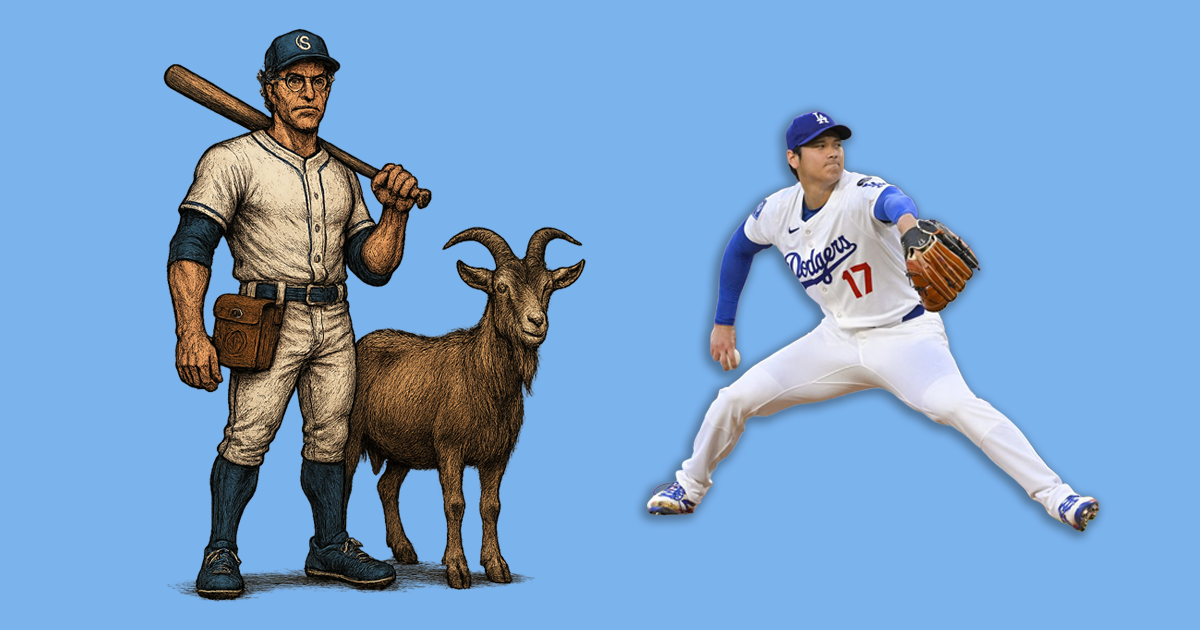
The Rush to Crown a New GOAT
Every time this generation witnesses a championship, they trip over themselves to crown a new “greatest of all time,” as if patience is an extinct concept. No hesitation, no perspective, no patience , just instant coronation. A few highlights, a mega-contract, a couple of commercials, and suddenly we’re all expected to nod along like this is the peak of human achievement, as if the sport didn’t exist before last Tuesday.
And now, after the Dodgers’ World Series win, which should be a moment to appreciate the team as a whole, the rush to deify Shohei Ohtani has reached full delirium.
Can we slow down? The celebration is deserved, but that does not change the point being made here.
What Greatness Used to Mean
Greatness used to mean something, and not in the flimsy, disposable way people talk about it today. It came from years of pressure, durability, suffering, heartbreak, and clawing through the postseason when every pitch felt like a verdict. And the guys from those eras did it while earning a fraction of today’s money, flying commercial, sleeping in questionable hotels, and grinding through injuries without a personalized data team, cryo chambers, and a small nation’s worth of performance staff pampering them.
Now we hand out half-billion-dollar contracts before October even arrives, handing out praise on credit like it is never going to come due, and then act shocked when anyone dares to question whether he has actually earned the GOAT label after one title run.
The Reality of Game 7
But let’s talk about what actually happened, because the mythology already forming around it is getting a little ridiculous.
In Game 7, Ohtani was the one on the mound who served up the three-run homer to Bichette, the swing that dropped the Dodgers into a devastating 0–3 hole. That wasn’t a moment of greatness. It was the sort of mistake that used to get a guy quietly shuffled to the bullpen for a month. That was the kind of mistake that almost handed Toronto the World Series. The only reason it didn’t bury the Dodgers is because the rest of the roster had to scrape, grind, and claw their way out of it with miraculous play after miraculous play.
The Real October Heroes
Mookie was the heartbeat of the team all year, involved in nearly every play, every inning, every momentum shift, doing the steady, blue‑collar work that modern fans barely notice because it doesn’t come with fireworks. He wasn’t putting up cartoon numbers in October, but he was the engine , the guy doing the unglamorous, constant, everywhere-at-once work that keeps a team from collapsing.
And in the World Series itself, it was the role players , Pages, Rojas, Will Smith, Muncy, and Yamamoto , who dragged the Dodgers out of that early hole. Everyone already knows the plays they made. The point is that this group, not Ohtani, supplied the backbone and the rescue work when the season was hanging by a thread, while the spotlight kept drifting toward the wrong direction. They were the ones who stabilized the chaos, swung the momentum back, and kept the Dodgers breathing long enough to win it.
If anyone took his postseason reputation and launched it into mythology, it was Freddie. Again , again , he delivered a championship-saving walk-off home run, the kind of moment almost no one in the sport has ever repeated. That’s the stuff that doesn’t fade. That’s the kind of October résumé people talk about when the era is long gone. That’s real GOAT-level postseason impact , not hype, not marketing, not projections, but actual, pressure-cooked greatness.
The Ohtani Problem in October
Meanwhile, Ohtani is a designated hitter most of the time and only takes the mound occasionally. That is not a criticism of the position, but it does matter when people start calling him the greatest ever. Other players in history carried full workloads in the field while also producing at the plate, and their impact stretched across every inning of every game. If the argument for Ohtani’s GOAT case is that he is a once-in-a-generation two-way player, then the pitching side of that equation has to actually hold up under pressure. In Game 7, it nearly cost the Dodgers the championship. Outside of one big night against the Phillies, which came in a series already in hand, his postseason batting has not shifted any series. That is the core of the issue: the GOAT conversation makes no sense when the defining skills are not deciding games when they matter most.
That’s not GOAT material.
If we’re being honest, Ohtani wasn’t even the top Japanese player on the roster this October. That distinction belonged to Yamamoto, who delivered actual heroics under real pressure. He wasn't the greatest hitter or the greatest pitcher, so it's just a weird argument to insist.
Slow Down the Statues and the Storylines
So let’s relax with the coronations, because right now the hype is running laps around the reality. Let time do its job. Let careers breathe.
Greatness isn’t something you fast-track because ESPN needs a new storyline. It isn’t something you manufacture with contract numbers or social media hype. The old legends earned their reputations over years of pressure, without private chefs, without analytics armies, without $700 million cushions to fall back on.
Ohtani is incredibly talented , no one is denying that. But postseason greatness? Legacy under fire? Moments that survive decades?
He hasn’t done that yet.
Let’s stop engraving the statue until the man actually builds it.